
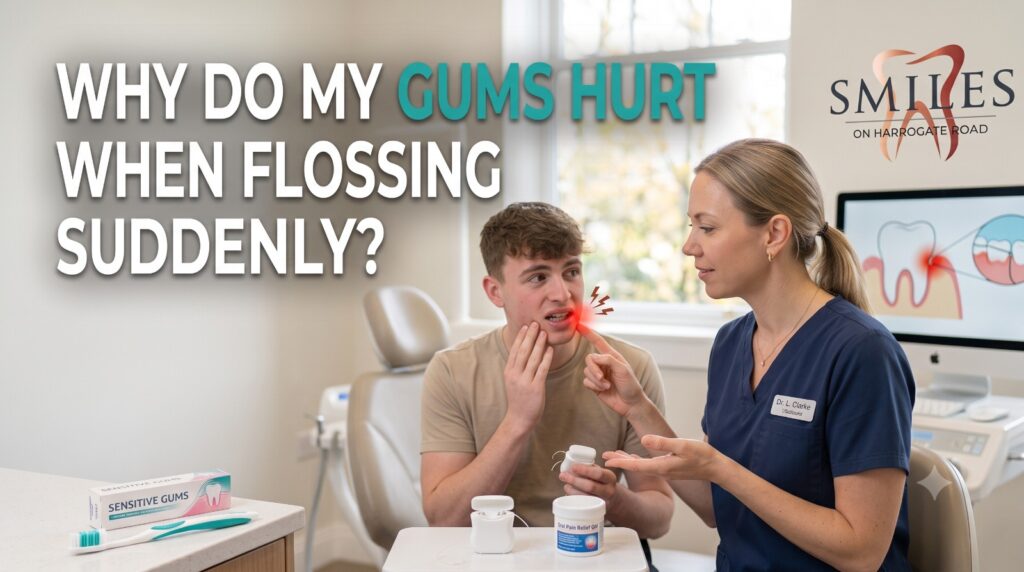
If you’ve been flossing without any problems and suddenly notice sore or bleeding gums, you’re probably wondering, “Why do my gums hurt when flossing suddenly?” While occasional tenderness isn’t always a cause for concern, it can also be an early sign that your gums need professional attention.
At Smiles on Harrogate Road, we regularly help patients identify the cause of gum pain when flossing and recommend the best treatment to restore healthy gums.
Common Reasons Your Gums Hurt When Flossing
1. Early Gum Disease (Gingivitis)
The most common cause of painful gums after flossing is gingivitis. This early stage of gum disease develops when plaque builds up around the gum line, causing inflammation, redness, tenderness and bleeding.
The good news is that gingivitis is reversible with professional dental cleaning and improved oral hygiene if treated early. If left untreated, it can progress into more serious periodontal disease. Our Dental Hygiene services are designed to remove plaque and tartar while helping you prevent gum disease before it becomes more serious.
2. You’ve Recently Started Flossing Again
If you’ve recently started flossing every day after a long break, your gums may feel sore for the first few days. This is often because inflamed gums are beginning to heal as plaque is removed from between the teeth.
With gentle daily flossing, the tenderness should improve within one to two weeks. Consistency is key, don’t stop flossing simply because your gums are a little sensitive.
3. You’re Flossing Too Aggressively
Using too much force can damage delicate gum tissue. Rather than snapping the floss between your teeth, gently guide it down the side of each tooth in a “C” shape before cleaning beneath the gum line.
If you’re unsure whether you’re using the correct technique, our dental team can provide personalised advice during your routine General Dentistry appointment.
4. Food Trapped Between Teeth
Sometimes a small piece of food becomes lodged beneath the gum line, causing sudden discomfort when flossing in one specific area. Gentle flossing may remove the debris, but if the pain continues or the area becomes swollen, it’s worth arranging a dental examination.
5. A Damaged Tooth or Filling
Pain that only occurs around one tooth could indicate a cracked filling, tooth decay or a damaged tooth that’s irritating the surrounding gum tissue. Early diagnosis can prevent the problem from becoming more serious and may save the tooth.
Our experienced team can assess the cause of your symptoms and recommend the most appropriate treatment.
When Should You See a Dentist?
You should book an appointment if:
- Your gums bleed every time you floss.
- The pain lasts longer than a few days.
- Your gums are swollen, red or tender.
- You have persistent bad breath.
- Your teeth feel loose or increasingly sensitive.
Ignoring these symptoms can allow gum disease to progress, making treatment more complex.
How to Keep Your Gums Healthy
Maintaining healthy gums doesn’t have to be difficult. Follow these simple habits:
- Brush twice a day with fluoride toothpaste.
- Floss or clean between your teeth every day.
- Attend regular dental check-ups.
- Visit your hygienist for professional cleaning.
- Avoid smoking, which significantly increases your risk of gum disease.
- Eat a balanced diet rich in vitamins that support gum health.
Regular appointments with our Dental Hygiene team can help prevent plaque build-up and keep your gums in excellent condition.
Book Your Gum Health Check Today
If your gums have suddenly started hurting when flossing, don’t ignore the warning signs. Early treatment can prevent more serious dental problems and help you maintain a healthy smile for years to come.
At Smiles on Harrogate Road, we’re committed to providing gentle, preventative dental care tailored to every patient.
If you’re concerned about bleeding, sore or swollen gums, contact our friendly team today to book an appointment. We’ll identify the cause of your symptoms and help you restore your gum health with expert care.